
.avif)
October 2, 2025

In this article:
1. When Outsourcing Makes Sense
2. When Outsourcing Doesn't Make Sense
3. Your Options: Honest Assessment
4. The Tradeoffs You're Making
5. What to Look for in Any Content Partner
You've tried posting consistently. It didn't stick. Now you're wondering if someone else should do it for you.
The honest answer: maybe.
Depends on why you're not posting, what kind of help you actually need, and what you're willing to trade off.
Let me walk you through it.
When Outsourcing Makes Sense
Outsourcing is probably the right call if:
You have the expertise but not the hours. You know exactly what you'd say—you just can't find the time to write it, edit it, and get it scheduled. The bottleneck is execution, not ideas.
The start-stop cycle has happened more than once. You've tried building a content habit. You've made promises to yourself. You've had bursts of activity followed by months of silence. At some point, willpower stops being a credible strategy.
LinkedIn actually affects your pipeline. Leads come from there. Referrals come from people seeing your content. The cost of inconsistency is real and measurable, not hypothetical.
You can articulate what you do. You know who you serve, what problems you solve, what makes you different. A writer can work with that. They can't invent it for you.
You're willing to invest upfront. Even the most hands-off outsourcing requires an intake process—explaining your business, your voice, your audience. It's not zero effort. But after that initial investment, things can run without much attention from you.
When It Doesn't Make Sense
Outsourcing probably isn't right if:
You don't know your own positioning yet. If you can't clearly explain who you help and how, a writer will produce generic content that sounds like everyone else. The "you" in those posts won't feel authentic because there's no clear "you" to capture.
You actually enjoy writing. Some people like crafting their own posts—they just procrastinate. If that's you, the solution is accountability or a better system, not delegation.
You're not willing to provide any input. Even the best done-for-you services need something to work with. If you're hoping to hand off content and never think about it again, you'll be disappointed. There's no mind-reading option.
Budget is very tight. Quality content outsourcing costs money—usually $150/month minimum for anything worthwhile, more like $300-700 for comprehensive packages. If that's not realistic right now, focus on building a DIY system you can sustain.
You're looking for a shortcut to going viral. Outsourced content won't make you famous overnight. It's about consistency over time, not quick wins. If you're expecting magic, you'll be disappointed.
The Options (Honest Assessment)
If outsourcing does make sense, here's what you're choosing between:
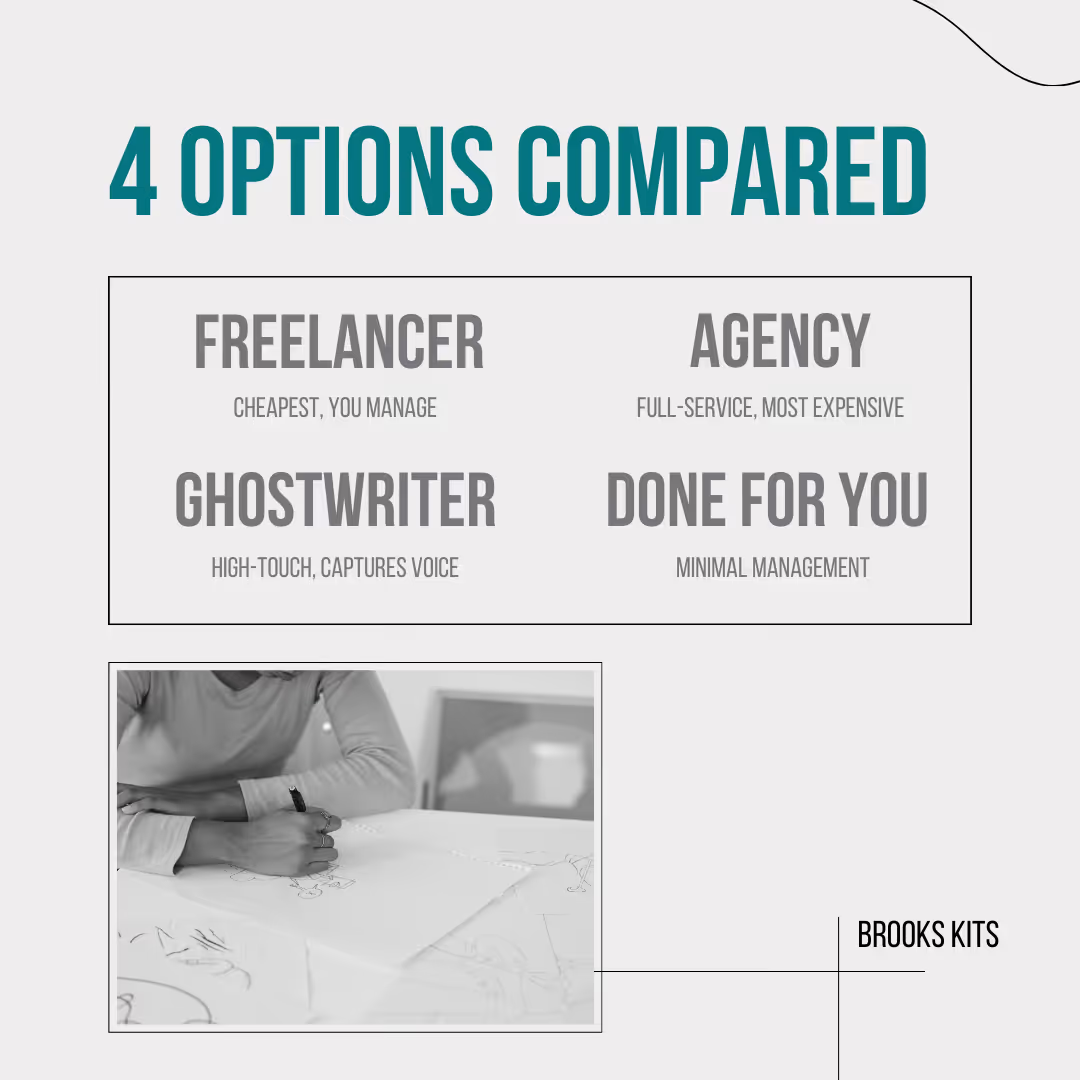
Freelance Writer
How it works: You find a writer, brief them on what you need, review their drafts, give feedback, manage the relationship.
What's good: Often the cheapest per-post option. You have tight control. Flexibility to scale up or down.
What's hard: You're the project manager. Finding a good writer takes time. Quality varies wildly. Many freelancers don't know your industry, so you end up rewriting half their work anyway. And if they get busy or disappear, you're back to square one.
Best for: People who have time for managing and editing, want granular control, and have found (or are willing to search for) a writer they trust.
Ghostwriter
How it works: A specialist who focuses on capturing your voice and ideas. They typically interview you regularly and produce content that sounds like you wrote it.
What's good: High-touch relationship. Can nail voice and nuance better than generalist writers. Often develops deep expertise in your space over time.
What's hard: Usually more expensive. Still requires your time for regular calls or input sessions. You're dependent on one person—if they leave, you're starting over with someone new.
Best for: People with budget who want content that feels deeply personal and don't mind regular conversations about what to write.
Done-For-You Content Service
How it works: You complete an intake process once. Content gets delivered on a schedule—monthly, weekly, whatever the service offers. You review, adjust if needed, publish.
What's good: Minimal ongoing time from you. Predictable delivery on a predictable schedule. Often includes multiple content types (not just LinkedIn). System doesn't break when one writer gets busy.
What's hard: Less customization per post. You're working within their process, not designing a bespoke relationship. Quality depends heavily on which service you choose.
Best for: People who want content solved as a system—maximum leverage with minimum ongoing management.
Content Agency
How it works: A marketing or content agency handles your content as part of a larger engagement—strategy, production, sometimes distribution and analytics.
What's good: Full-service approach. Access to multiple specialists. Often includes strategic guidance, not just execution.
What's hard: Most expensive option. Usually involves retainer commitments. May include services you don't actually need. Slow to onboard.
Best for: Companies with larger budgets who want content as part of a broader marketing strategy with strategic oversight.
The Tradeoffs You're Actually Making
Every outsourcing decision has tradeoffs. Better to be clear-eyed about them upfront.
Control vs. Leverage
The more you outsource, the less control you have over each individual post. You're trading perfectionism for consistency.
Cost vs. Time
You're paying money to reclaim time. Make sure the time you're saving is worth what you're paying—and that you'll actually use that time productively.
Authenticity vs. Scalability
The most authentic content is the stuff you write yourself, in your own words, capturing your specific thoughts. Outsourced content can get close, but rarely identical. That might be fine for you. Depends how much the distinction matters.
Dependency vs. Freedom
If you outsource everything, you become dependent on the service. If they disappear, change quality, or raise prices significantly, you're scrambling. Not a reason to avoid outsourcing—just a reason to keep your content positioning documented so you could recreate it if needed.
What to Look for in Any Partner
Regardless of which route you choose:
Industry Understanding
They should know your industry well enough that the content sounds credible to people in it. Or they should be willing to learn quickly.
Voice-Matching Ability
Read their samples. Can they write in different tones? Does everything sound the same, or is there range?
Clear Process
How does onboarding work? How do revisions work? What's the turnaround? Vagueness here leads to frustration later.
Transparent Pricing
If you can't figure out what something costs without a sales call, that's a yellow flag.
Samples From Similar Clients Generic portfolio pieces don't tell you much. Ask for work they've done for consultants or B2B businesses like yours.
How Brooks Kits Fits
Since you're on our site, I'll be direct about what we offer and who it's for.
Brooks Kits is a done-for-you content service. One intake form—fifteen minutes, covers six months of context. Then content lands in your portal on the first of every month. LinkedIn posts, emails, blogs depending on your package. Written, organized by week, ready to schedule.
No calls. No ongoing briefs. No draft reviews unless you want them.
Three tiers:
Spark ($179/month): 2 emails, 8 LinkedIn posts. Baseline visibility.
Authority ($399/month): 4 emails, 12 LinkedIn posts, 1 SEO blog. Most popular.
Lead Engine ($699/month): Everything in Authority plus lead magnet, landing page copy, and welcome sequence.
We've delivered over 200+ kits. 98% of clients stick around month after month.This works well for consultants and small business owners who've tried the DIY route and know it won't stick—and who want content to just show up, done, every month.It's not the right fit if you want heavy customization on every piece, prefer working closely with a single writer, or haven't figured out your positioning yet.
See the packages →
The Bottom Line
"Should I outsource my LinkedIn content?" is really two questions:
1. Is content important enough to invest in? If LinkedIn drives your pipeline, yes. If it's purely nice-to-have, maybe focus elsewhere first.
2. Can you realistically sustain it yourself? If you've tried and failed repeatedly, the answer is probably no. That's not weakness—it's information.
Outsourcing isn't a shortcut. It's a system. The people who succeed with it aren't avoiding work—they're delegating work they can't sustain so it actually gets done.Whatever you decide, decide something. The worst outcome is letting "should I outsource?" become another item that sits on your list while your content stays nonexistent.
More on this:
Done-for-You Content vs. Hiring a Freelancer
Why Small Businesses Struggle with Content Marketing
How to Stay Visible on LinkedIn Without Burning Out

You know you should post on LinkedIn. You're not going to do it consistently. Here's the system that actually works.
February 6, 2026
How to Stay Visible on LinkedIn (Without It Becoming Your Job)

Everyone wants the magic number. There isn't one—but there's a range that works, and posting more than you think might be hurting you.
January 2, 2026
How Often to Post on LinkedIn in 2026

You know things clients pay real money to learn. Here's how to turn that expertise into posts—plus 30 specific ideas you can steal this week.
January 16, 2026
LinkedIn Content Ideas for Consultants (30+ That Actually Work)

When hiring out your LinkedIn content makes sense, when it doesn't, and what the tradeoffs actually are. No sales pitch—just a straight answer.
February 2, 2026
Should You Outsource Your LinkedIn Content?

Most small business owners know content matters. Few do it consistently. Here's what's actually happening—and the fixes that work when willpower doesn't.
February 16, 2026
Why Small Businesses Struggle with Content Marketing (And What Actually Works)

You've decided to outsource content. Now: freelancer or done-for-you service? Here's the honest breakdown of cost, time, quality, and what actually works.
January 22, 2026
Done-for-You Content vs. Freelancer: Which Is Right for You?