
.avif)
January 8, 2026

In This Article:
1. The Short Answer: 2-5 Posts Per Week
2. What Two Million Posts Tell Us
3. The Catch Nobody Mentions: Quality vs. Quantity
4. Multiple Posts Per Day: Does It Help?
5. Consistency Beats Volume
6. Finding Your Number
7. Best Times to Post on LinkedIn in 2026
8. The Real Enemy: Start-Stop Posting
9. What This Looks Like in Practice
"I know I should post more. I just never know what to say."
If you're a consultant, you've probably muttered this. Maybe this morning.
Here's the thing: you explain complex ideas to clients every single day. You clarify confusion, challenge assumptions, give people frameworks they didn't have before. That's literally your job.
The problem isn't that you have nothing to say. It's that translating what you know into a LinkedIn post feels like a completely different skill.It's not. You just need a system.
Why This Matters More Than You Think
We get this question constantly. Usually phrased as "what's the optimal posting frequency?"—as if there's a setting you can dial in and watch the leads roll.
There isn't. But there is a range that works, and in 2026 we have enough data to stop guessing.
The Short Answer: 2-5 Posts Per Week
Two to five posts per week. That's the range where most consultants and small business owners see real returns without burning out or annoying their audience.
Below two, you're not showing up enough for the algorithm—or your network—to remember you exist. Above five, you're probably hitting diminishing returns unless content is literally your full-time job.
Now for the longer answer...
What Two Million Posts Tell Us
Buffer's data science team analyzed over two million LinkedIn posts from 94,000 accounts. Their headline finding: posting more often helps, and the benefits hold regardless of how big your audience is.
The breakdown:
One post per week keeps you technically active but leaves growth on the table. You're visible enough to not disappear entirely, but you're not building momentum.
Two to five posts per week is where things shift. Moving from once weekly to this range showed roughly 1,200 additional impressions per post and a measurable bump in engagement rate. This is the sweet spot for most people.
Six to ten posts per week continues the climb. Per-post reach keeps improving. But this volume requires either a content team or a level of personal bandwidth most business owners don't have.
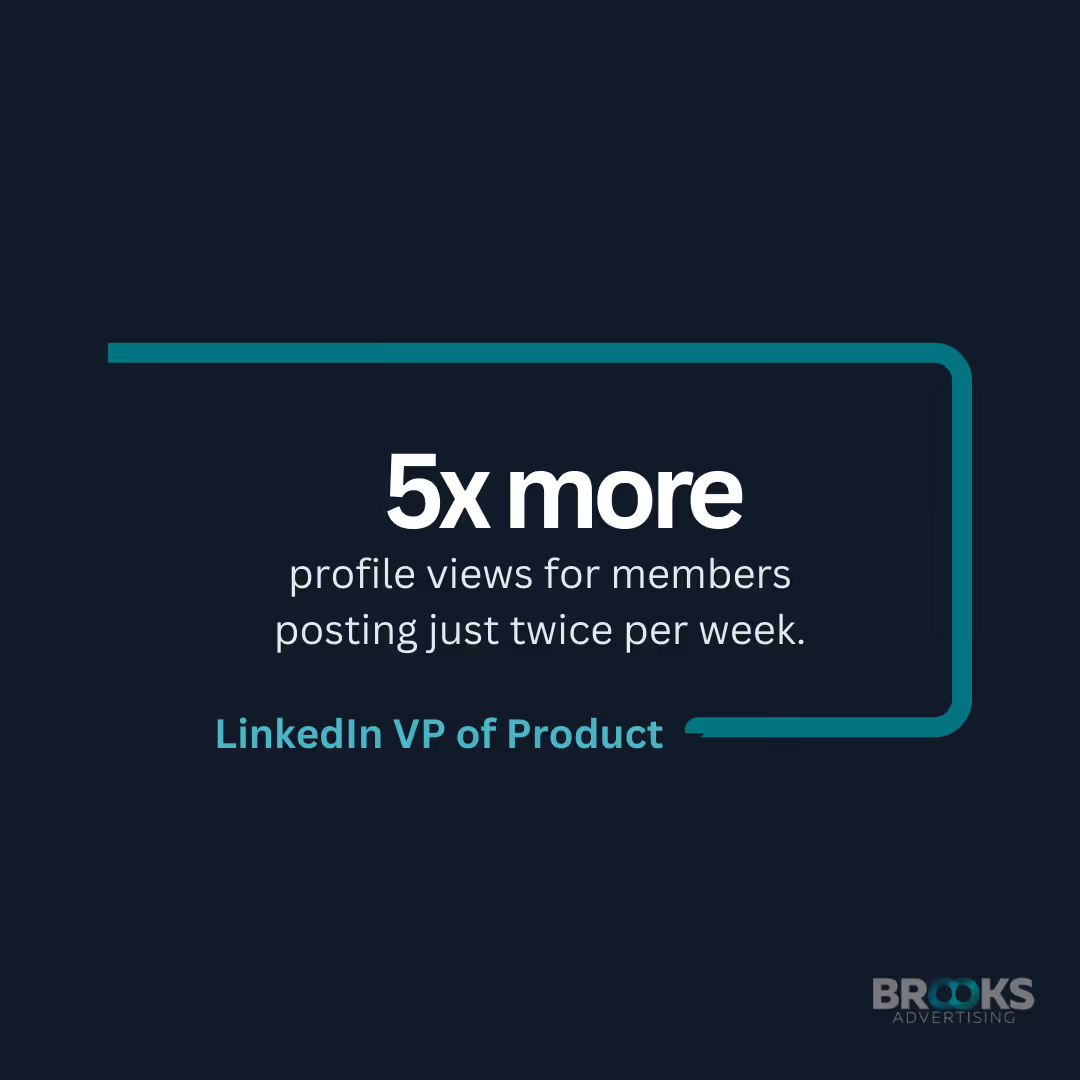
Eleven-plus posts per week shows nearly triple the engagements per post compared to once-weekly accounts. But let's be realistic—if you're posting eleven times a week, content is your primary job. That's not most of us.LinkedIn's own VP of Product, Gyanda Sachdeva, publicly recommends 2-5 posts weekly. She also noted that members posting just twice per week see up to five times more profile views than less frequent posters.
The Catch Nobody Mentions: Quality vs. Quantity
Here's where the data gets tricky: more posts help on average but that doesn't mean more posts help you specifically.
A separate analysis of 247 B2B company pages over 18 months found that companies posting three times weekly generated 2.2x more qualified leads than those posting daily with lighter content.
Read that again.
Three posts per week beat daily posting.
The difference was quality. The daily posters were churning out thinner content to hit their number. The three-times-weekly posters were publishing stuff worth reading.
The research also identified an audience fatigue threshold around 12-15 posts per month. Beyond that, engagement per post starts declining. Your audience gets tired of seeing you—or, worse, starts scrolling past automatically.
Finding Your Number
The floor is two posts per week. Below that, you're not playing the game.
If you can hit three consistently without quality dropping, you're in the range where compound effects start kicking in.
If you can sustain five without burning out or mailing it in, you'll see stronger results—but most people can't, and that's not a character flaw.
Multiple Posts Per Day: Does It Help?
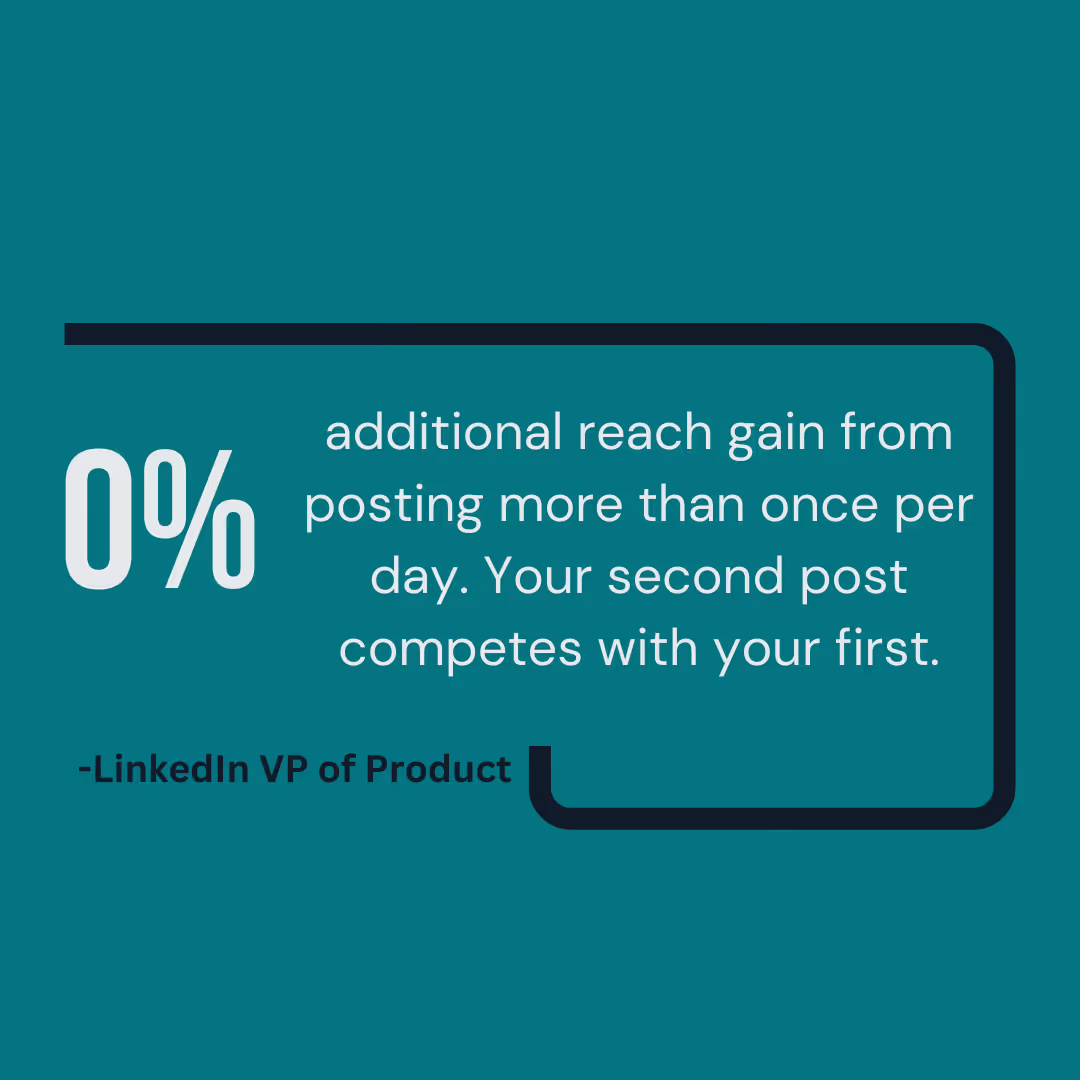
LinkedIn's guidance is clear: posting more than once a day won't hurt your total reach, but it probably won't help either.
Sachdeva's explanation: "People want to see content from a range of voices. If you share several posts close together, members will likely see the one that is most relevant to them."
Translation: your second post of the day is competing with your first. LinkedIn will show whichever one seems more relevant to each viewer, which means you're cannibalizing your own distribution.
For most people running a business one post per day is the maximum worth testing. Any more and you're working harder without getting more.
Consistency Beats Volume
Almost every study on LinkedIn posting eventually says some version of the same thing: consistency beats volume.
One analysis compared posting at optimal times versus random times. The difference between the "best" window (9am-12pm) and the second-best window (12pm-3pm) was marginal—less than half a percentage point in engagement rate.
But the difference between consistent posting and sporadic posting was huge. Accounts that showed up at the same time every week dramatically outperformed accounts that posted the same total amount but at random intervals.
This makes sense. The algorithm learns patterns. If you post every Tuesday and Thursday at 9am, LinkedIn starts expecting it. Your audience does too. You become part of people's routines rather than an interruption.
The people who build real audiences on LinkedIn aren't necessarily posting more than you. They're just posting reliably.
Best Times to Post on LinkedIn in 2026
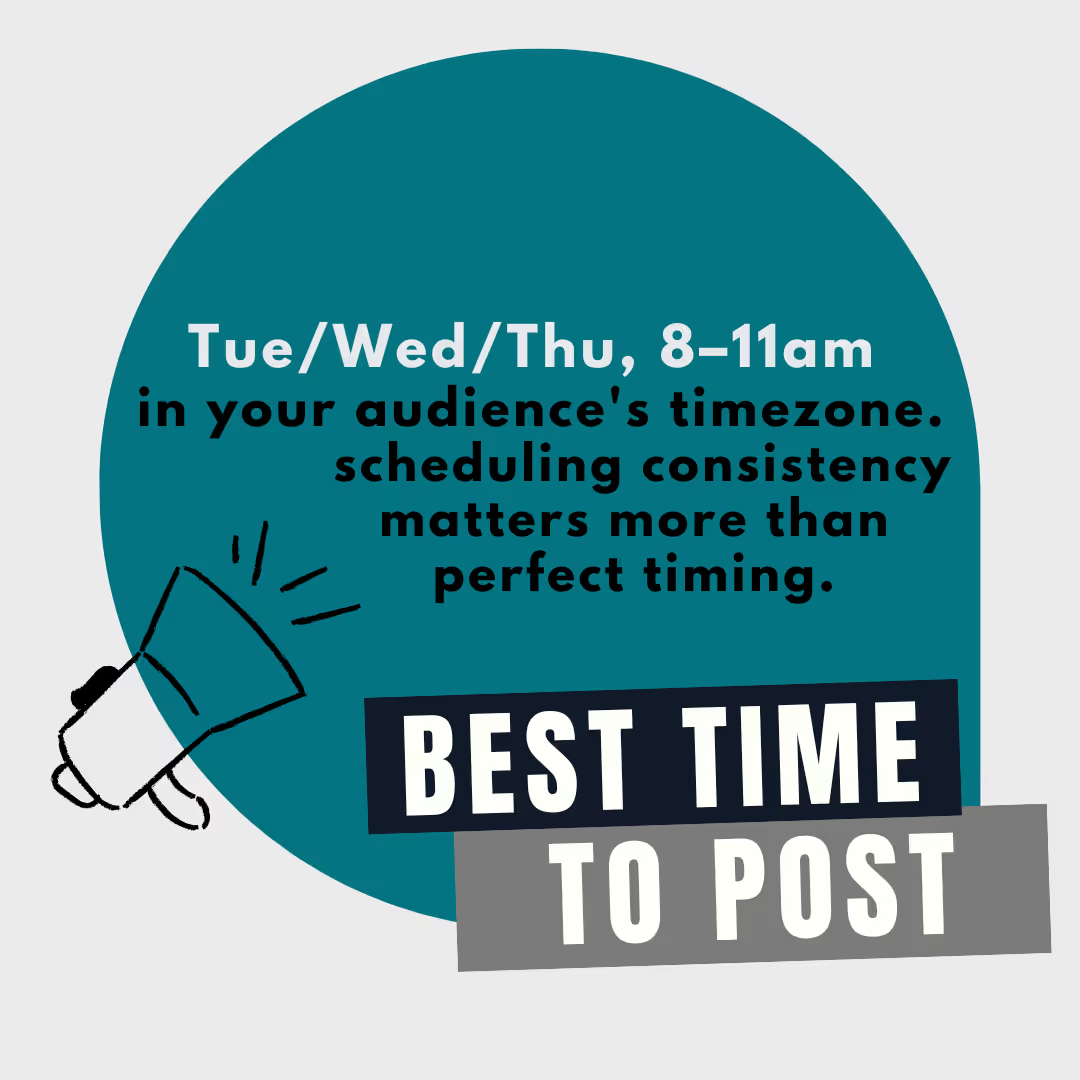
The data on best times is pretty consistent:Best days: Tuesday, Wednesday, Thursday
Best times: 8am-11am in your audience's time zone
Also decent: Monday morning, Friday afternoon
Weakest: Weekends (significantly lower engagement across the board)
But here's the thing—timing optimization is mostly a distraction. The difference between posting at 9am versus 11am is negligible compared to the difference between posting consistently versus sporadically.
Pick a time that works for your schedule. Stick to it. That matters more than finding the theoretically perfect window.
The Real Enemy: Start-Stop Posting
The most common failure pattern isn't posting too little. It's posting inconsistently.
Someone posts for three weeks, gets busy, goes quiet for a month, feels guilty, posts intensely for a week, burns out, goes quiet again. The cycle repeats until they give up entirely.
Each gap resets your momentum with the algorithm. Each restart feels harder because you've lost the habit. Eventually "I should post on LinkedIn" becomes background guilt that never converts to action.
Breaking this cycle means accepting a simple truth: posting consistently at a lower frequency beats posting in bursts at a higher frequency.
Two posts every single week for six months will build more than ten posts in January followed by nothing until April.
What This Looks Like in Practice
Say you decide on Tuesday and Thursday mornings at 9am. That's your schedule.
You block 60-90 minutes on Friday afternoon to batch-write the following week's posts. You load them into LinkedIn's scheduler or Buffer or whatever tool you use. You walk away.
Tuesday morning, your post goes live automatically. You spend ten minutes engaging—replying to comments on yours, commenting thoughtfully on a few posts from people in your space. Thursday, same thing.
Total weekly time: maybe two hours, including the writing.
That's sustainable. That's a system you can protect even during busy weeks. And that consistency, maintained over months, compounds into an audience that actually knows who you are.
When You Can't Sustain It Yourself
Some people can run this system indefinitely. They protect the time, they don't mind the writing, they stay consistent.Most can't. And there's no shame in that—it just means the DIY approach isn't the right fit.
If you've tried building a posting habit more than once and it hasn't stuck, outsourcing isn't giving up. It's being realistic about what you'll actually sustain.
Brooks Kits delivers LinkedIn posts monthly—8, 12, or 20 depending on your package. Written based on a single intake form you fill out once. No calls, no briefs, no ongoing management from you. Content lands in your portal on the first of the month. You copy, paste, schedule.
That's one way to solve the consistency problem without relying on willpower.
See the packages →
The Bottom Line
LinkedIn rewards consistency over intensity. The people building audiences aren't posting more—they're posting more reliably.Pick a frequency you can actually sustain. Two or three posts per week is plenty if you show up every single week. Protect your posting days. Batch your content so you're never scrambling.
And when you slip—because you will—restart without drama. Momentum rebuilds faster than you'd expect. But only if you actually restart.
More on this:
How to Stay Visible on LinkedIn Without Burning Out
LinkedIn Content Ideas for Consultants
Should You Outsource Your LinkedIn Content?

You know you should post on LinkedIn. You're not going to do it consistently. Here's the system that actually works.
February 6, 2026
How to Stay Visible on LinkedIn (Without It Becoming Your Job)

Everyone wants the magic number. There isn't one—but there's a range that works, and posting more than you think might be hurting you.
January 2, 2026
How Often to Post on LinkedIn in 2026

You know things clients pay real money to learn. Here's how to turn that expertise into posts—plus 30 specific ideas you can steal this week.
January 16, 2026
LinkedIn Content Ideas for Consultants (30+ That Actually Work)

When hiring out your LinkedIn content makes sense, when it doesn't, and what the tradeoffs actually are. No sales pitch—just a straight answer.
February 2, 2026
Should You Outsource Your LinkedIn Content?

Most small business owners know content matters. Few do it consistently. Here's what's actually happening—and the fixes that work when willpower doesn't.
February 16, 2026
Why Small Businesses Struggle with Content Marketing (And What Actually Works)

You've decided to outsource content. Now: freelancer or done-for-you service? Here's the honest breakdown of cost, time, quality, and what actually works.
January 22, 2026
Done-for-You Content vs. Freelancer: Which Is Right for You?